- SERVICES
-
-
- FOR BUSINESS
- COMMERCIAL SOLID WASTE
- COMMERCIAL LIQUID & SPECIAL WASTE
- FOR BUSINESS
-
- OUR FACILITIES
- SUPPORT
- ABOUT US
- INVESTORS
- SIGN UP FOR SERVICES
- English
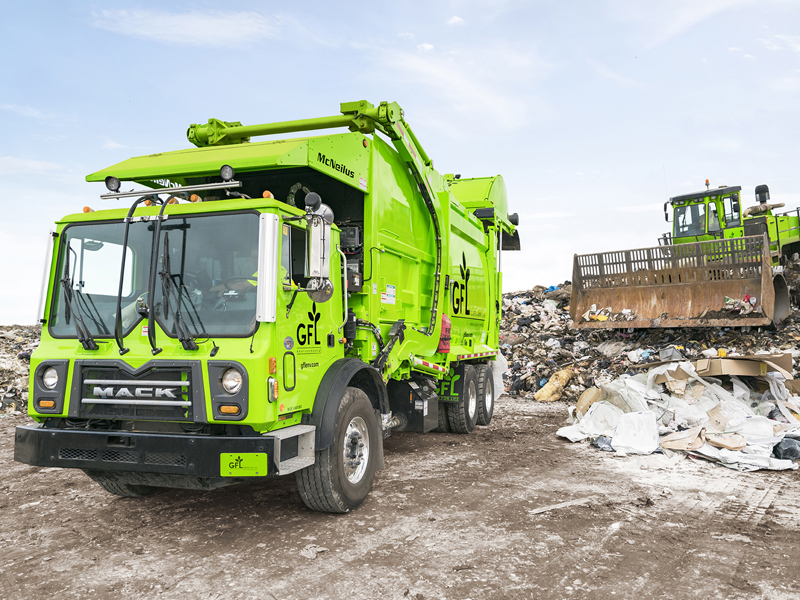
GFL owns and operates a broad network of 45 specially designed non-hazardous solid waste landfills and processing facilities across our North American footprint.
GFL manages a number of different types of solid waste landfills. These include:
Landfills are a part of GFL’s responsible, sustainable solutions to manage our customers’ wastes. When diversion of waste materials is not an option, GFL offers safe, fully-regulated disposal solutions through our licensed facilities. Our landfills operate in strict compliance with all applicable environmental regulations, to ensure the proper management of permitted non-hazardous municipal (MSW), industrial, construction and demolition (C&D), and special solid waste.
GFL’s modern landfill management systems work to protect soil and groundwater from impacts while limiting the release of air and greenhouse gas emissions. Our landfills are engineered to include environmental protection technologies such as:
Our landfills also include sophisticated monitoring systems to ensure that the engineering technologies in place are working to protect the environment. Our monitoring systems include monitoring of odor, groundwater and surface water, leachate and landfill gas.
Our comprehensive safety and environmental management systems, including operations plans and standard operating procedures and training of all of our landfill employees, ensure the safe, sustainable and environmentally responsible management of our landfills.
GFL invests heavily in landfill gas-to-energy technology that captures landfill gas and converts it to a renewable source of electricity. By the end of 2019, 79% of GFL owned and operated municipal solid waste landfills had gas collection and treatment systems. One of our largest gas-to-energy solid waste landfills is our Eastern Ontario Waste Handling Facility in Moose Creek, Canada. Commissioned in 2013, the facility’s 4.2 MW landfill gas-to-energy plant was designed to generate electricity for 4,000 local homes.
Through our on-site landfill gas recovery systems, GFL typically recovers around 2,117,730 MMbtu of landfill gas per year, which results in a significant reduction in CO2e emissions. For example, in 2019, 39,751 tons of GHG emissions were avoided due to alternative energy generation at our landfills.
The energy produced by our alternative generation systems is used to supply electricity for on-site operations, residential homes, and other commercial or industrial facilities, which significantly reduces GFL’s fossil fuel consumption and on-site operational energy costs.
Find a Location Near You


